If you ever wondered what terror looks like on a shoestring budget, Halloween is your answer. John Carpenter took $325,000, a small-town setting, and a William Shatner mask, and somehow created one of the most influential horror movies of all time.
But watching it now—forty-five years later—you realize something: Halloween is both brilliant and ridiculous in equal measure.
The Setup
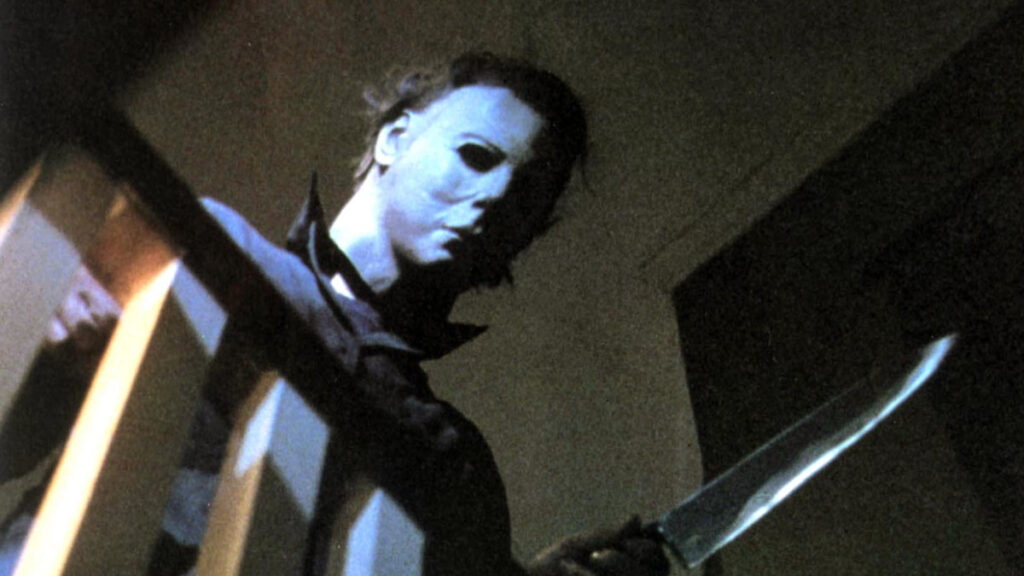
The movie opens with one of the most famous POV shots in horror history: six-year-old Michael Myers murders his sister with a kitchen knife while we, the audience, see it all through his tiny, sociopathic eyes. Fast forward fifteen years, and he’s back in Haddonfield, Illinois—stalking teenagers, ignoring public safety laws, and driving better than most people on I-270 despite being institutionalized since first grade.
Dr. Loomis, his unhinged psychiatrist, spends the movie running around town yelling “He’s pure evil!” while brandishing a gun and accomplishing almost nothing. Laurie Strode, meanwhile, just wants to babysit in peace—but between creepy phone calls, dead dogs, and the world’s worst friends, that’s not in the cards.
By the end, Michael racks up a respectable body count, Loomis unloads his pistol into him (six times!), and the boogeyman disappears into the suburban night. Cue that haunting piano riff.
What Still Works
Even with all its age showing, Halloween remains a masterclass in atmosphere.
- Dean Cundey’s cinematography gives the film its eerie, voyeuristic feel—simple but unsettling.
- Carpenter’s score is a minimalist miracle: five notes, infinite anxiety.
- And for a movie that’s basically bloodless, it’s genuinely creepy. Michael’s silent, emotionless presence is scarier than any CGI ghoul Hollywood’s cooked up since.
What Doesn’t
That said… hoo boy. There are more holes in this movie than in Judith Myers’ chest.
- Nobody in Haddonfield can see or hear anything useful. Laurie’s screaming her head off while neighbors turn off their porch lights like it’s just another night in Illinois.
- The pacing? Slower than a slasher on Xanax.
- The dialogue? A steady parade of awkward pauses and wooden delivery.
- And the acting—well, let’s just say if horror movies had Yelp reviews, this one would have a lot of “great concept, but the staff seemed disinterested.”
Still, for all its flaws, you can’t help but admire how Halloween works in spite of itself. It’s scrappy filmmaking at its finest: fake leaves, improvised lighting, and a masked villain who never runs—but never stops coming.
The Boogeyman’s Sense of Humor
What we love most, though, is that for all his menace, Michael Myers also has comedic timing. The ghost-sheet prank? That’s not just murder—that’s showmanship. Somewhere between stalking teens and killing mechanics, he found time to work on his prop comedy routine.
And that’s why he earned our Boddicker Award for this film—strong, silent, creepy, stabby, and just the right amount of darkly funny.
The Final Sip
When it comes to lasting influence, Halloween towers above the genre it created. It’s the slasher blueprint: the “Final Girl,” the masked killer, the point-of-view stalker cam, and that inevitable sequel hook. None of it works quite this well again—but everyone keeps trying.
Does it hold up?
Mostly.
Is it scary?
In the right lighting, sure.
Would we watch it again?
Every damn October until the day we die.
But let’s be honest—some beers definitely help smooth over the rough edges.
Final Beer Score: Six Beers.
Enough to make the acting tolerable, the pacing faster, and the ghost scene even funnier.